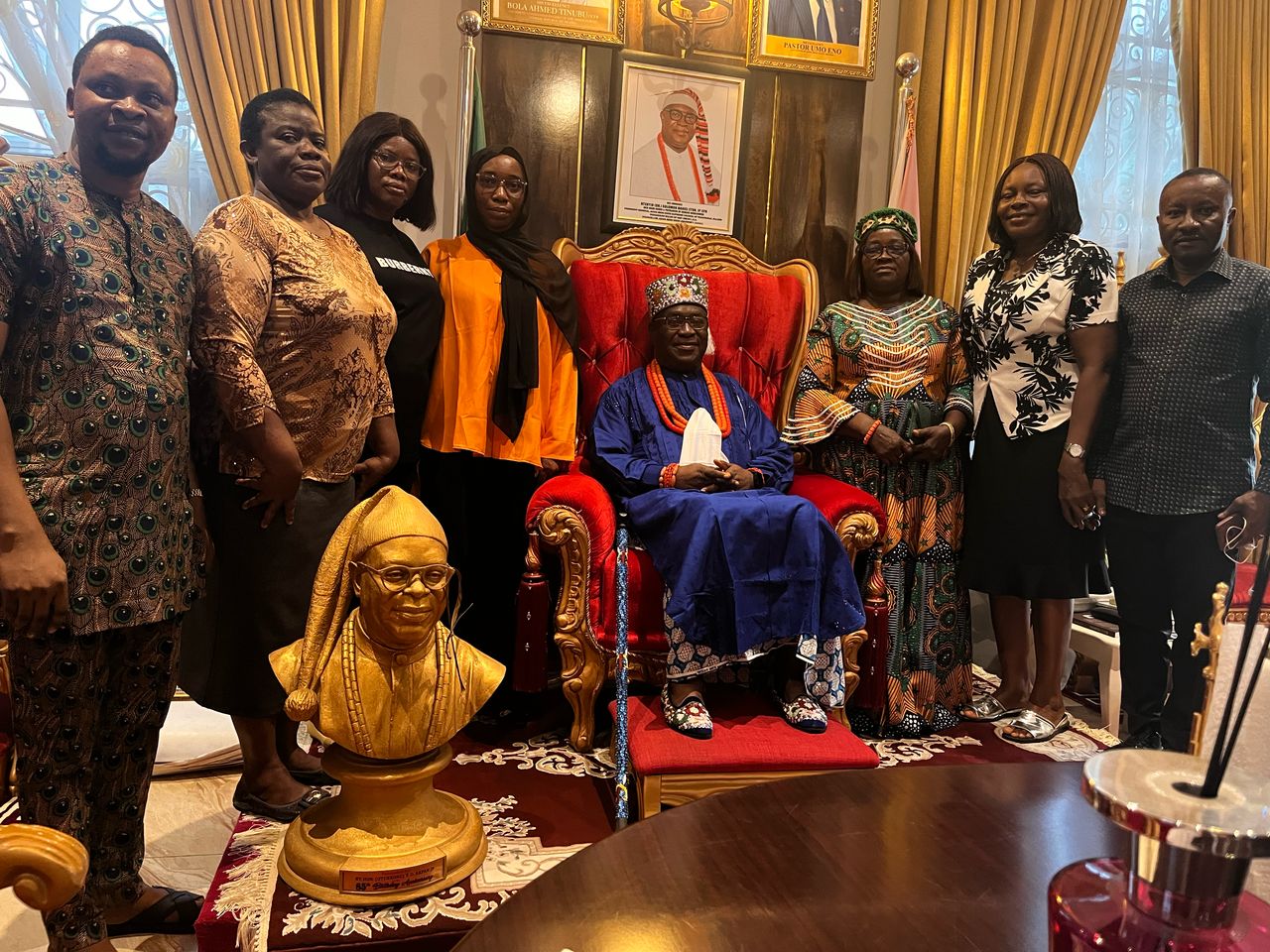
As part of efforts to promote the implementation of the 35% Affirmative Action (AA) for women in governance, the Nigerian Women Trust Fund (NWTF), with support from the Open Society Foundations (OSF), carried out advocacy visits to key stakeholders in Enugu and Akwa Ibom States in March 2025. The visits aimed to raise awareness of the court judgment mandating 35% representation for women, mobilize support from decision-makers, and gather stakeholder feedback to strengthen advocacy for gender-inclusive governance.
In Enugu State, engagements were held with the Secretary to the State Government, the Speaker of the State House of Assembly, the Chairman of the Traditional Rulers’ Council, and the Attorney General. Stakeholders acknowledged the importance of women’s leadership and expressed varying degrees of support. The Secretary to the State Government commended Enugu’s efforts in appointing women based on merit, while the Speaker pledged legislative backing but advised prioritizing appointive positions due to electoral challenges women face. Traditional leaders also expressed shock at the non-implementation of the National Gender Policy and committed to advocating for women’s inclusion.
Similarly, in Akwa Ibom State, the NWTF engaged the Secretary to the State Government, the Attorney General, the Commissioner for Women Affairs, the President General of the Supreme Council of Traditional Rulers, and a member of the State House of Assembly. The discussions emphasized the challenges women face, including financial constraints and cultural barriers. Stakeholders affirmed their support, with commitments from the House of Assembly and the Commissioner for Women Affairs to advance gender-inclusive policies and legislative reforms that promote women’s political representation.
Both advocacy visits revealed the need for continuous engagement with stakeholders at all levels—executive, legislative, and traditional institutions—to ensure the effective implementation of the 35% Affirmative Action. Lessons learned include the importance of local contacts in securing access and engagements, as well as the need for sustained advocacy, grassroots capacity building, and stronger financial support mechanisms for women pursuing political offices.
NWTF recommends follow-up engagements to reinforce commitments, advocate for legislative backing of the policy, and mobilize resources to empower women, especially at the grassroots. It remains critical to frame the 35% Affirmative Action not as a threat to male participation but as a necessary strategy for national development and democratic growth. Both states presented valuable insights that will inform NWTF’s continued efforts towards achieving gender equity in governance.



I commend Senator Akpabio for his maturity, I have always known him as a man who values the female gender.
I also want to encourage the advocacy for women to be given special priority in contesting for political positions, more awareness needs to be created, it was not easy for me to emerge as the first female elected Councilor of my Ward at the age of 34 years, I was even rejected by fellow women, it took me extra energy and the intervention of the wife of ABIA State Governor to be able to emerge at the primaries, I had to spend extra in advocacy visit to women forums of my constituency to canvas for votes and get them to believe in my candidacy, I refused to be discouraged by major factors, if sponsored, I aim to go higher in my political aspiration.
We need to increase awareness on women supporting women campaign even as the supported women work hard to make a difference in the community in order to encourage voters.
I personally hope and desire to attract as much development as I can to my community.